
If Dogs Could Text About Their Bodies (What Would They Say?)
If dogs could text us about their bodies, we’d probably get a lot more information.
Unfortunately, instead of sending messages like:
“Hey, my left hip feels tight today.”
…they send:
Stares. Pauses. Sits slowly. Pretends nothing happened.
Because dogs don’t complain with words. They communicate with movement.
So let’s imagine what their texts might actually say if they could.

📱 Text #1: “Can we not do the stairs today?”
You: “Why are you standing at the bottom?”
Dog (in your inbox):“Listen. I can do them. I just… would rather not.”
Hesitation before stairs can be one of the earliest mobility shifts owners notice. It doesn’t mean something dramatic is happening. It may simply reflect a body choosing the path of least effort.
Dogs often adapt quietly before anything becomes obvious.
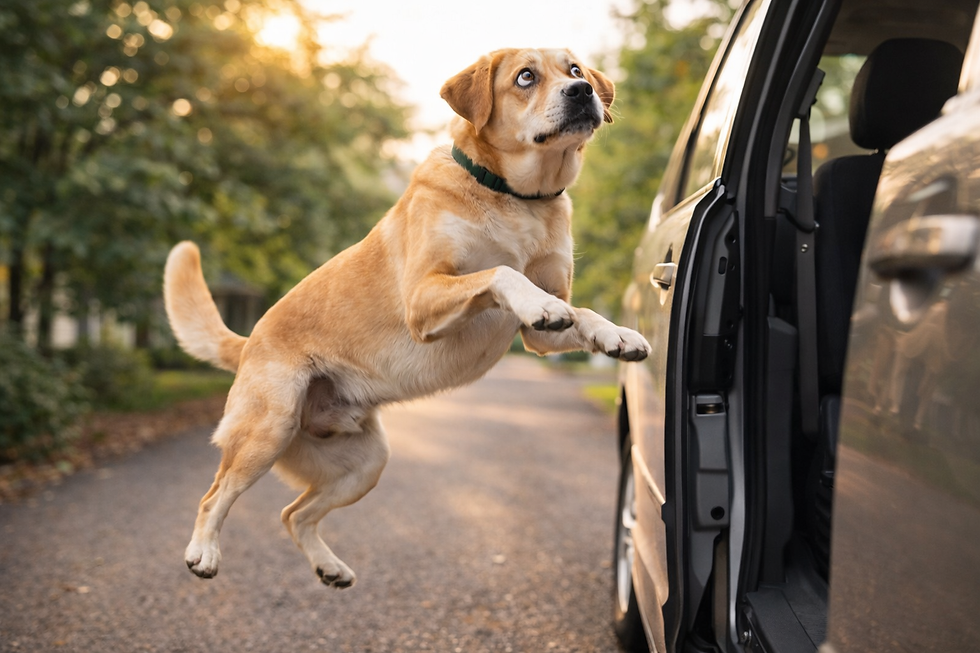
📱 Text #2: “That jump used to be easier…”
You: “You’ve jumped into the car a thousand times.”
Dog:“Yes. And today I would like you to acknowledge that gravity is stronger.”
A pause before jumping isn’t laziness. It can be a moment of body awareness.
When transitions take more thought than they used to, the body may be adjusting to subtle changes in comfort or muscle engagement.

📱 Text #3: “Why are you watching me stand?”
You: “I’m just observing.”
Dog:“Oh good. Because I’m distributing my weight strategically.”
Dogs are masters of compensation. If one area feels slightly restricted, they shift weight elsewhere. It’s intelligent. It’s protective.
But over time, uneven weight distribution may place extra demand on other areas.
If your dog suddenly prefers standing with one paw slightly forward, that’s not random.
That’s a strategy.

📱 Text #4: “I’m not dramatic. I’m adjusting.”
You: “Why did you lie down again?”
Dog:“Because comfort is a lifestyle choice.”
Sometimes dogs sit more frequently. Or lie down sooner on walks. Or turn more carefully.
These are not personality flaws. They are communication.
Mobility changes often show up as reduced enthusiasm for repetitive movement — not because your dog doesn’t want to go, but because their body is recalibrating.

📱 Text #5: “Floor is lava.”
You: “It’s just hardwood.”
Dog:“It’s a skating rink.”
Slippery surfaces reveal mobility shifts quickly. If your dog suddenly hesitates on tile or hardwood, it may be because balance feels slightly less stable than before.
Adding traction can support confidence — and confidence supports smoother movement.

📱 Text #6: “I’m still young. Just… thoughtfully young.”
You: “You’re not old.”
Dog:“Correct. I am selectively athletic.”
Aging doesn’t mean limitation. But it does mean the body changes over time.
Muscle tone shifts. Flexibility adjusts. Recovery after activity may take longer.
That doesn’t require panic. It invites awareness.
The Real Message Behind the Humor
Dogs don’t send texts. They send signals.
A slower rise from rest
A pause before stairs
A subtle weight shift
A shorter stride
These changes rarely happen overnight. They develop gradually — and because they’re subtle, they’re easy to dismiss.
Mobility awareness isn’t about diagnosing anything. It’s about noticing patterns and supporting long-term comfort as part of a wellness routine.
If dogs could text, they’d probably say:
“Hey. Just… pay attention a little earlier.”
If They Could Text, They’d Ask for Awarenes
Your dog doesn’t need dramatic symptoms to deserve support. Small shifts in movement are often the body’s quiet way of asking for balance and comfort.
If you’ve started noticing subtle changes in how your dog moves, practitioner-guided mobility support may help encourage healthy movement and long-term comfort as part of a wellness-focused approach.
And if nothing else — keep watching. They’re always communicating.
Disclaimer: Soul Paws does not diagnose, treat, cure, or prevent disease.
All services and products are intended to support comfort, mobility, and overall well-being and are designed to complement—not replace—veterinary care.


Comments