
20 Fascinating Facts About How Dogs Move, Feel, and Compensate — and Why It Matters for Their Long-Term Health
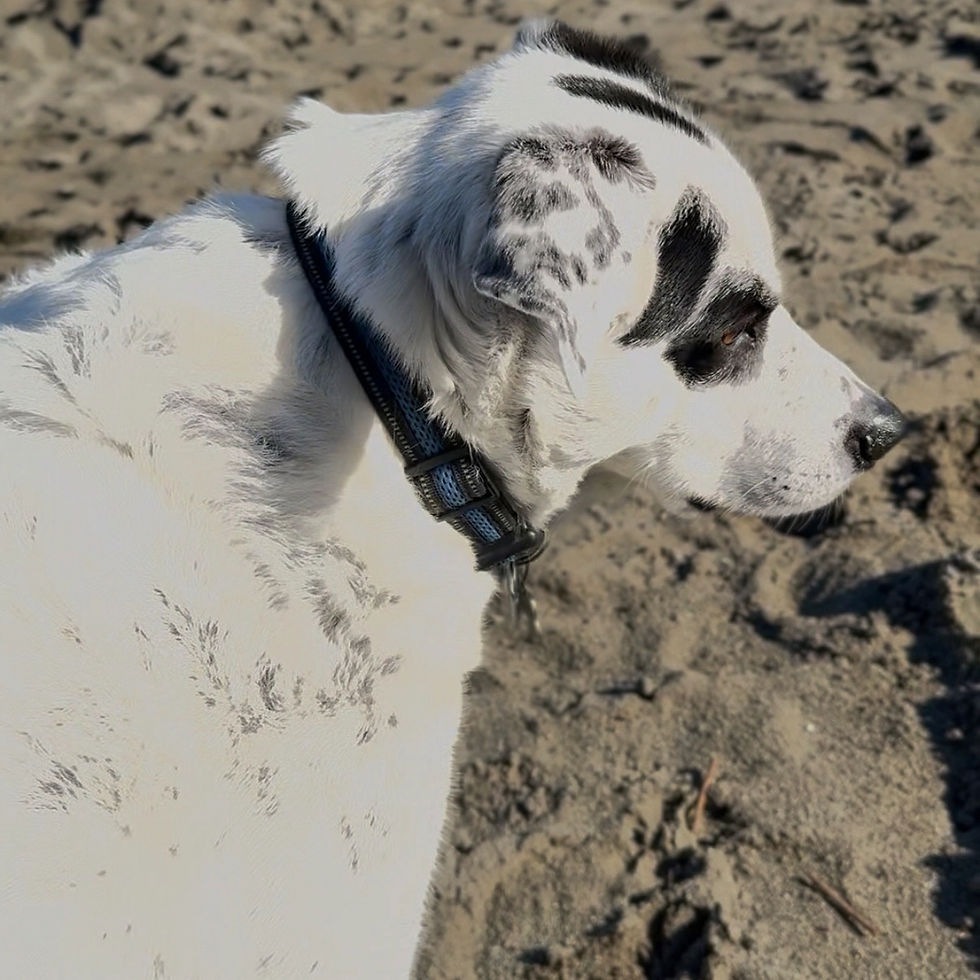
Why Everyday Movement Matters More Than You Think (Facts #11 - 20)
Dogs are masters of "I'm fine. Carry on."
Walkies! Park! Squirrel! Treat!
They quietly compensate, adjust their movement, and keep going until the body can't anymore. The facts below explain how dogs really move, stabilize, and protect themselves, and why small daily habits matter far more than most people realize.
What Most Dog Bodies Are Compensating For — Not What They’re “Injured” By
Most dogs don't wake up injured - they adapt, compensate, and carry on. By the time a limp, behaviour change, or "old age stiffness" shows up, the body has often been working around a problem for months (or years).
Understanding compensation is where real prevention - and lasting comfort - begins.
Fact #11: Dogs do not have a clavicle
Unlike humans, dogs do not have a bony clavicle connecting the front limb to the body. Instead, the entire front end is suspended by muscle — a structure known as the thoracic sling.
This design allows for speed, shock absorption, and adaptability — but it also means muscle balance matters more than bones.
What the science says:
Instead of a rigid bone connection, a dog’s shoulder is supported by a muscular suspension system that allows the scapula to glide along the rib cage. This design increases stride length and shock absorption — but it also means stability depends entirely on soft tissue balance and coordination.
(Evans & de Lahunta, Guide to the Dissection of the Dog; Bradshaw et al.)
Why it matters:
If your dog:
jumps on and off the sofa
launches out of the car
skids to a stop chasing a ball
pivots hard on trails
…the force of landing is absorbed not by bone, but by muscle and fascia.

Over time, repetitive jumping and abrupt landings increase tension through the neck, shoulders, and chest — not because anything is “injured,” but because the suspension system is doing all the work.
This becomes especially important when a dog subtly offloads a hind limb (which happens far more often than people realize). When the back end compensates, the front end often takes over — and without a clavicle, the shoulders are frequently the first place that compensation shows up - before injury or arthritis.
Practitioner insight:
This is why dogs can look structurally “fine” yet feel tight, short-strided, or guarded in the front end. The issue isn’t dramatic trauma — it’s cumulative load on a system designed for movement, not repeated impact.
Practitioner Insight (Deeper Dive)
The front end is supported by a group of five key muscles—often described as a thoracic sling—that act like a hammock holding the body between the forelimbs. These muscles include:
Serratus Ventralis
Rhomboids
Trapezius
Deep Pectorals
Transverse Pectorals
Transcending Pectorals
*and there are 3 other key muscles that support the thoracic sling as well as the amazing interconnected web of fascia*
For an Overview of the Canine Thoracic Sling:
Unlike the hips, the canine shoulder has no bony joint attaching the front limb to the trunk.
There is no clavicle connecting the forelimb to the rib cage.
There are 5 muscles that attach the scapula (shoulder blade) to the rib cage, spine, and neck.
Many of these muscles are triangular or fan-shaped, which is no accident. This shape allows them to:
spread force across a wider area
stabilize while still allowing motion
respond dynamically to changes in speed, terrain, and load
In other words, the thoracic sling is not just about movement — it’s about balance, suspension, and adaptability.
Why This Matters for Dogs (and Their Guardians)
Because the front end is suspended by fascia and muscle rather than locked into a joint:
small changes in muscle tone can have big effects
tension in one area often shows up somewhere else
neck stiffness, short strides, paw rotation, or elbow swing can all trace back to sling imbalance
This is why dogs may show:
“mysterious” front-end stiffness
chronic neck or shoulder tension
altered gait without a clear injury
behavioural changes linked to physical guarding
Understanding the thoracic sling helps us move beyond “where it hurts” and start asking: What is the body trying to support, protect, or avoid?
Fact #12: Dogs don't walk the way we do - they're always on their toes.
Your dog is basically walking in permanent tip-toes. Dogs are digitigrade (toe-walkers), unlike humans who walk heel-to-toe (plantigrade).
What the science says:
Digitigrade posture increases speed and elastic energy return, but it also magnifies the impact of even minor muscular or fascial restriction. Small inefficiencies don’t stay small for long.
(Alexander; Carrier et al.)
Why it matters:
Because dogs live on their toes.
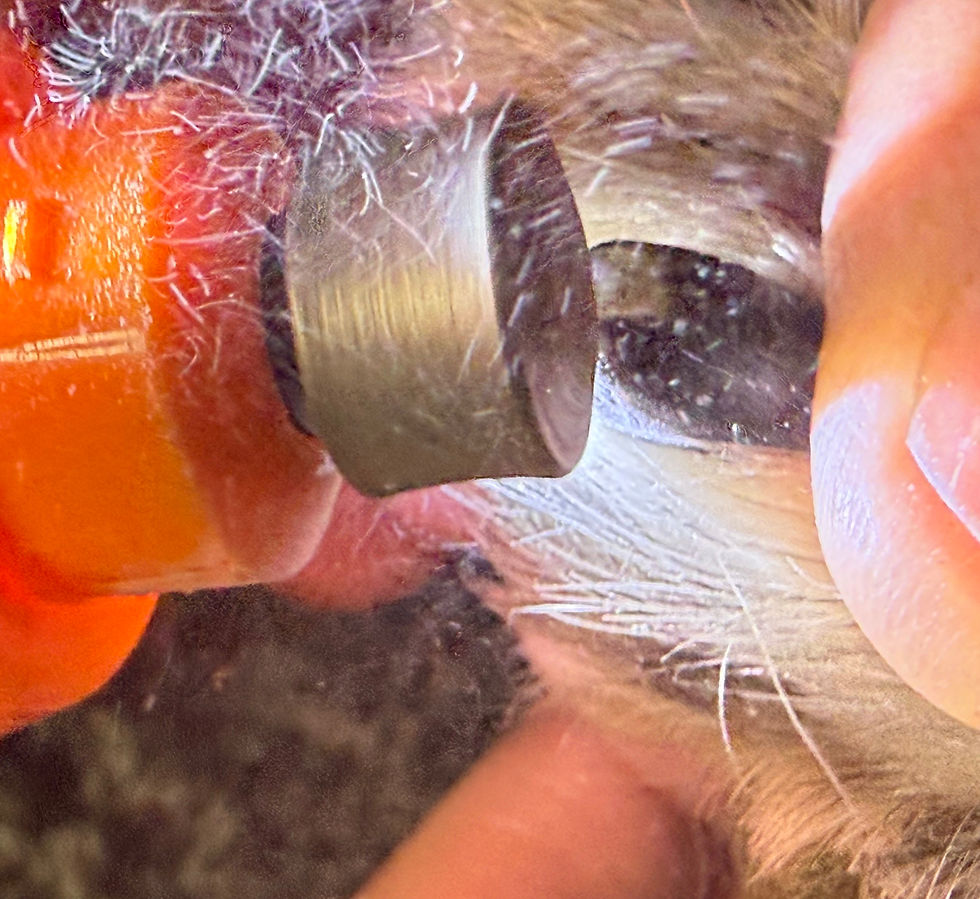
Everything starts at the paw.
Long nails, stiff toes, tight paw pads, or subtle discomfort change how force travels up the limb. That affects the wrist, elbow, shoulder—and eventually the thoracic sling.
Common everyday contributors: Most Long-term tension patterns don't start with injuries. They start with small, repeated habits that slowly teach the body how to brace, compensate, or guard.
• Repetitive leash tension on one side
• Slippery floors without traction support - especially hardwood, marble, tile
• Jumping in and out of vehicles or off furniture
• Sitting or lying the same way every day
• Long nails altering paw and limb mechanics
• Harnesses or collars that restrict shoulder glide
• High stimulation without enough recovery time
• Landing awkwardly on uneven trail terrain/ground
• Launching after a moving ball
Why this matters:
These patterns don’t cause pain overnight —
they accumulate, especially in fascia and the nervous system.
By the time a dog is 5–7 years old, many of these habits are written into their movement.
Curious which habits might be affecting your dog most?
Cranial Cruciate Ligament (CCL) Tear Prevention Connection:
When paw mechanics or front-end loading are altered, dogs often redistribute force backward. That can increase rotational stress through the stifles (knees), particularly during turns, stops, and directional changes—exactly the movements associated with CCL injuries.
This is one reason nail care, paw mobility, and front-end balance matter far more than most people realize.
Fact #13: Dogs Don't Move Muscle-by-Muscle - They Move as One Connected System
Dogs rely far more on fascia than isolated muscles to move, stabilize, and adapt. And this changes everything about how their bodies respond to stress, injury, and everyday life.
Imagine this: If the human body is like a machine with individual parts, the canine body is more like a living fabric. Pull one thread - and the tension shows up somewhere else. That fabric is fascia. Another way to visualize fascia is that it is like a spider web. If you pull on one side, the entire web is affected.

What the science says:
Quadrupedal movement distributes load diagonally across the body, relying on interconnected fascial lines rather than single-muscle effort.
(Bradshaw et al.; Schleip et al.)
Why it matters:
Dogs don’t move like machines with separate parts—they move like systems. When one area tightens or weakens, force reroutes elsewhere.
A mild knee tweak, early arthritis, or post-surgical change in the hind end often leads to compensatory tension in the shoulders, neck, or opposite limb. Owners frequently notice these changes before any obvious limping appears.
CCL Tear Prevention Connection: Read more..
After a hind-limb strain or early CCL change, dogs often offload subtly rather than dramatically. Fascial compensation can hide the problem—until the other knee or the front end starts showing signs of strain.
Supporting balanced fascial movement helps reduce these compensation chains before they become entrenched.
Practitioner insight:
This is why I tell my clients "less force is more powerful on dogs" and even though one side may be tight, a practitioner may work on the opposite side first to address the body as a whole. This is also why a “back-end issue” so often shows up as shoulder tightness. The body isn’t confused—it’s adapting. Vigorous rubs and friction on dog's skin is oftentimes going to make them uncomfortable. Practicing restraint with intentional touch and micro-movement to release fascial constriction within dermatome zones and fascial lines can have much greater and lasting effects.
A Few Cool Facts About Dog Paws
Fact #14: Dogs Regulate Heat Through Their Paws
Dogs both lose and conserve heat through specialized paw vasculature. The sweat glands in their paws are also involved in marking territory,
What the science says:
Paw pads contain dense networks of arteries and veins that dynamically adjust blood flow for thermal regulation.
(Irving & Scholander)
Why it matters:
Good circulation through the paws supports tissue health, joint comfort, and recovery. When movement decreases—due to pain, stiffness, or altered gait—poor circulation often follows. One of the best rehabilitation techniques is arterial and venous circulatory massage.
Cold paws, sensitivity during nail trims, or reluctance to place weight evenly can sometimes reflect broader tension or mobility issues, not just temperature.
Fact #15: Northern Breeds Have Specialized Paw Heat-Exchange Systems
Northern and Arctic-adapted breeds (Huskies, Malamutes, Samoyeds) can stand and move on snow and ice with minimal heat loss through their paws.

What the science says:
These breeds rely on counter-current heat exchange in the paw vasculature. Warm arterial blood transfers heat internally to cooler venous blood before it reaches the paw surface, preserving core temperature while preventing tissue damage.
(Górski et al.; Scholander)
Why it matters:
This adaptation allows cold-weather breeds to:
• maintain circulation in freezing conditions
• move efficiently on snow and ice
• tolerate cold surfaces without discomfort
But this system depends on movement and tissue elasticity. When joints stiffen or soft tissue becomes restricted, circulation efficiency drops — even in cold-adapted dogs.
Practitioner insight:
I often see northern breeds who are perfectly happy lying on snow but show stiffness after rest. Cold tolerance does not equal joint immunity. These dogs still benefit enormously from mobility, circulation support, and recovery care as they age.
Why I often recommend the "Walk & Massage" Combo especially for northern breeds:
Movement helps them regulate before being touched
Trust builds faster side-by-side than face-to-face
Muscles and fascia respond better after gentle activity
Book a Walk & Massage for your dog (Vancouver area only)
Fact #16: Surface Avoidance Is About Comfort — Not Cold
When dogs suddenly avoid certain surfaces (cold ground, tile, hardwood, gravel), the cause is often musculoskeletal discomfort, not temperature sensitivity.
What the science says:
Dogs regulate paw temperature differently than humans, and surface avoidance is more strongly linked to proprioceptive confidence, joint comfort, and sensory feedback than thermal discomfort alone.
(Irving & Scholander; Budras et al.)
Why it matters:
If a dog:
• hesitates on cold or hard surfaces
• frequently shifts weight while standing
• avoids lying down in certain spots
• becomes fidgety on familiar flooring
…it may reflect:
• joint stiffness
• altered weight distribution
• reduced postural confidence
• compensatory loading patterns
These behaviours often appear before limping or overt pain.
Practitioner insight:
When guardians tell me, “He just doesn’t like the floor anymore,” it’s rarely about preference. Dogs change behaviour when something in the body feels less safe or less efficient — and surfaces are where that shows up first.
Fact #17: Dogs Have Flexible Spines Built for Galloping
Dogs’ spines flex and extend dramatically during running.

What the science says:
This spinal flexibility enables the double-suspension gallop—a gait humans physically cannot perform.
(Hildebrand)
Why it matters:
A dog’s spine is designed to move dynamically. When spinal motion becomes restricted—through chronic tension, arthritis, or compensation from limb injuries—dogs often lose endurance before enthusiasm.
They still want to go. They just can’t move as efficiently.
CCL prevention connection: Read more..
Restricted spinal motion shifts workload to the hind limbs, particularly during acceleration and turning. Reduced spinal contribution means the knees absorb more force—one of the quiet contributors to CCL strain over time.
Fact #18: Your Dog Has Built-In “Radar” on Their Face

What we casually call whiskers (vibrissae) are actually high-precision sensory tools that help dogs understand where their body is in space — especially when vision isn’t enough.
What’s really going on
Those stiff hairs on your dog’s:
• muzzle
• chin
• cheeks
• and above the eyes
aren’t just hair.
They’re called vibrissae — and each one is rooted in a deep, nerve-rich pocket that acts like a motion sensor.
Fact #19: Cutting Whiskers Can Disrupt a Dog’s Navigation and Confidence
Trimming a dog’s facial vibrissae (commonly called whiskers) can temporarily reduce their ability to judge distance, place their feet accurately, and move with confidence.
What the science says:
Each vibrissa is connected to a specialized nerve structure that sends constant spatial feedback to the brain. This feedback helps dogs:
• orient their head and body
• assess depth before moving
• navigate tight or unfamiliar spaces
• commit safely to jumps, steps, or turns
When vibrissae are removed, that sensory information is suddenly reduced.
Nothing is “damaged” — but the brain has less data to work with.
What this can look like in real life
After whisker trimming, some dogs may:
• misjudge where the ground is
• hesitate before stepping forward
• bump into objects
• place their feet inaccurately
• move more cautiously than usual
• appear “off” or less confident without obvious injury
These changes are often subtle — and easy to misinterpret as clumsiness, stubbornness, or anxiety.
Case Study: Ali M's pup, Oscar; Poodle Mix
Oscar was groomed by a well-meaning but less experienced groomer who trimmed the facial vibrissae along his muzzle, chin, and above the eyes.
In the weeks that followed, Ali noticed several changes that hadn’t been present before:
• Oscar walked into holes and uneven ground
• he hesitated before placing his feet
• he bumped into objects he previously navigated easily
• his overall confidence in moving and standing declined
There was no sign of pain or injury — just uncertainty.
From a bodywork and nervous system perspective, this presentation is consistent with temporary sensory disruption. Oscar’s musculoskeletal system was intact, but his spatial feedback loop had been altered.
Without his usual vibrissae input, his nervous system had less information to guide safe movement.
As the vibrissae regrew and with supportive, calming bodywork focused on regulation and reassurance, Oscar’s confidence gradually returned.
Why this matters:
For dogs who already rely heavily on sensory input — including:
• seniors
• dogs with mobility changes
• dogs recovering from injury
• anxious or trauma-affected dogs
• dogs with vision changes
…the impact of vibrissae trimming can be more noticeable and longer-lasting.
This is especially relevant for dogs with hair coats (such as Poodle mixes, Doodles, and Portuguese Water Dogs), where facial trimming is more common and whiskers are often mistaken for cosmetic hair.
Important clarification (for guardians and groomers):
This isn’t about blame.
Many groomers are taught that trimming whiskers is harmless, and in some dogs the effects are mild or brief. However, the absence of immediate injury does not mean the absence of impact.
Vibrissae are part of a dog’s sensory system. Removing them removes information.
Practitioner insight
When a dog shows sudden hesitation, imbalance, or reduced confidence after grooming — especially without signs of pain — it’s worth asking a simple question:
“Were the whiskers trimmed?”
Supporting these dogs isn’t about correction or retraining.
It’s about allowing the nervous system time, safety, and sensory clarity to recalibrate.
Guardian takeaway
If possible:
• ask groomers to leave whiskers intact
• especially for senior, anxious, or mobility-sensitive dogs
• observe your dog’s movement after grooming
• trust subtle changes — they matter
Whiskers aren’t decorative. They’re navigation tools.
Nervous System → Endurance
When a dog’s sensory system is disrupted — whether through whisker trimming, injury, or chronic tension — the body doesn’t stop moving.
It adapts.
Dogs are remarkably good at continuing forward even when information is missing. But adaptation always comes at a cost: more effort, less efficiency, and greater reliance on internal reserves.
Which brings us to the next fascinating fact.
Fact #20: Dogs Have Higher Red Blood Cell Counts Than Humans
Dogs have a higher red blood cell (RBC) count than humans, giving them greater oxygen-carrying capacity.
What the science says:
Red blood cells transport oxygen to working tissues. A higher RBC count allows dogs to:
• sustain movement for longer periods
• recover more quickly between efforts
• tolerate physical demands even when mechanics are less efficient
(Guyton & Hall, Textbook of Medical Physiology)
Why it matters:
This physiological advantage is one of the reasons dogs can:
• keep going despite subtle discomfort
• mask early strain or compensation
• appear energetic even when movement quality is declining
In other words, endurance can hide inefficiency.

A dog may still want to walk, run, hike, and play — not because everything is optimal, but because their body has the reserves to push through.
Practitioner insight:
This is why dogs so often arrive in bodywork sessions not “injured,” but adapted.
They haven’t stopped moving.
They’ve simply been working harder — internally — to do the same things they’ve always done.
Over time, that extra effort shows up as:
• stiffness after rest
• shortened stride
• reduced play endurance
• or strain appearing somewhere else entirely
From whiskers to paws, from fascia to joints, dogs are masters of compensation.
They don’t complain.
They adjust. Which is precisely why subtle support, thoughtful movement care, and early intervention matter far more than dramatic fixes.
Practitioner Insight Note:
Practitioner insights shared throughout this article are drawn from hands-on experience in canine bodywork, anatomy and movement observation through Soul Paws. This content is educational and not intended to diagnose, treat, cure or prevent disease. For medical concerns, sudden changes, or worsening symptoms, please consult your veterinarian.
Coming Up February 19th : Fascinating Canine Facts #21–30
In the next section of this series, we’ll zoom out even further — from movement mechanics to aging, resilience, and long-term soundness.
Here’s a sneak peek at what’s coming next:
Fact #21: Dogs Feel Pain Differently Than Humans
Why dogs often keep moving despite discomfort — and why waiting for obvious limping is rarely the right cue.
Fact #22: A Dog’s Nervous System Ages Before Their Joints Do
How regulation, stress load, and recovery capacity change years before arthritis shows up on X-rays.


Comments