
How Repetitive Play (Fetch, Tug, Running) Creates Muscle Imbalance
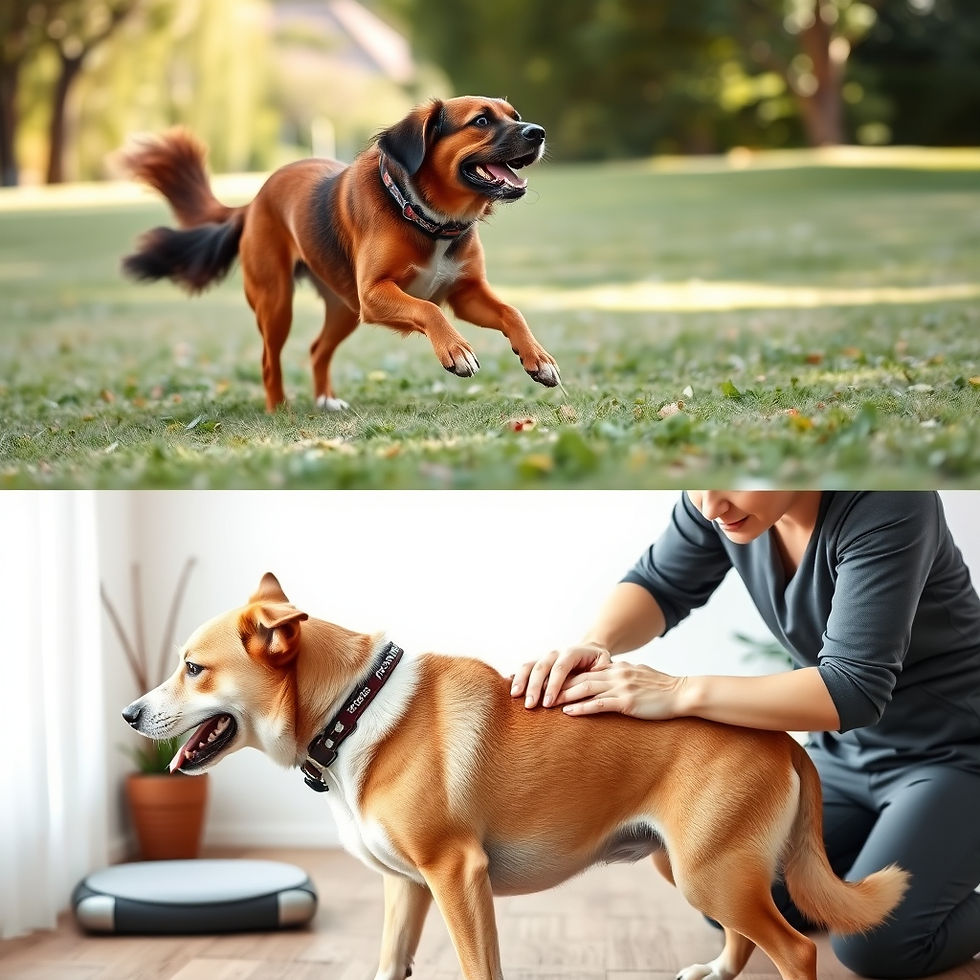
Why one-sided fun can quietly strain your dog’s body — and how to prevent it.
Introduction
Fetch. Tug. Running. These are some of the most common — and most loved — activities in a dog’s daily life. They’re energizing, enriching, and a fantastic way to bond. But like anything repetitive, these activities can quietly shape the body in ways we don’t always expect.
When dogs perform the same movements over and over again, especially in one direction or with the same pattern, certain muscles become overdeveloped while others are underused. Over time, this imbalance can lead to stiffness, reduced range of motion, compensation, and even injury — often without obvious warning signs.
At Soul Paws Massage, we frequently see dogs who are active, happy, and “fit” — yet carrying deep muscle imbalance caused by repetitive play. Understanding how this happens allows owners to keep play fun and safe.
🦴 What Is Muscle Imbalance?
Muscle imbalance occurs when:
Some muscles become tight, dominant, or overworked
Opposing muscles become weak, underused, or inhibited
Movement patterns lose symmetry
Joints lose balanced support
Dogs rely on balanced muscle engagement to move efficiently. When balance is lost, the body compensates — increasing strain elsewhere.
Muscle imbalance doesn’t mean your dog isn’t strong. In fact, many imbalanced dogs look very muscular. Strength without balance, however, creates vulnerability.
🎾 Fetch: The Most Common Culprit
Fetch seems harmless — but it’s one of the biggest contributors to muscle imbalance.
Why fetch creates imbalance
Dogs often turn the same direction repeatedly
One side of the body does most of the deceleration
Front legs absorb most of the impact
Sudden stops strain shoulders and wrists
Launching movements overload hips and lower back
Over time, this can lead to:
Overdeveloped shoulders
Tight chest muscles
Reduced shoulder extension
Back stiffness
Uneven muscle tone
Dogs rarely stop playing because of discomfort — they simply adapt.
🪢 Tug: Strength with a Twist
Tug builds strength — but it’s often asymmetrical.
Common tug-related patterns
Pulling predominantly to one side
Bracing through the neck and shoulders
Twisting through the spine
Engaging one side of the jaw more
This creates uneven tension in:
Neck muscles
Shoulders
Spine
Jaw and facial muscles
Without balance, tug can contribute to:
Neck stiffness
Head tilt
Uneven shoulder height
Reduced spinal flexibility
🏃 Running: Repetition Without Variety
Running is natural for dogs — but repetitive running on:
Pavement
Trails
Slopes
One direction loops
…can create overuse patterns.
Common running-related strain
Hip flexor tightness
Hamstring fatigue
Front-end overload
Reduced joint shock absorption
Dogs who run regularly without cross-training often develop:
Shortened stride
Stiffness after rest
Reduced flexibility
⚖️ Why One-Sided Play Is a Problem
Dogs often:
Turn more easily one direction
Favor one lead leg
Pull toys to one side
Pivot the same way during play
These preferences aren’t wrong — but they reinforce imbalance.
Over time, one side of the body:
Becomes stronger but tighter
Loses elasticity
Takes on more workload
The other side becomes weaker and less engaged — setting the stage for injury.
🧠 Why Dogs Don’t Tell Us When It’s Too Much
Dogs are driven by joy, instinct, and reward — not body awareness.
They don’t self-limit when:
Muscles fatigue
Joints strain
Tissue tightens
Instead, they:
Push through
Compensate
Adjust posture
Continue playing
By the time discomfort is obvious, imbalance is often well established.
🐾 Signs Repetitive Play Is Affecting Your Dog
Watch for:
Stiffness after play
Slower warm-up walks
Uneven muscle development
Resistance to certain movements
Reduced flexibility
Behaviour changes after activity
Shortened stride
These are early signals — not failures.
💆 How Massage Helps Restore Balance
Massage is one of the most effective tools for addressing repetitive-play imbalance because it works directly with soft tissue.
Massage helps by:
✔ Releasing overworked muscles
✔ Improving circulation
✔ Restoring flexibility
✔ Reducing compensatory tension
✔ Supporting symmetrical movement
✔ Identifying imbalance early
At Soul Paws Massage, we assess muscle tone, symmetry, and movement patterns — not just sore spots.
🛠️ Prevention Tips for Healthier Play
You don’t need to stop playing — just play smarter.
Helpful strategies
Alternate throwing directions during fetch
Limit continuous repetitions
Add rest breaks
Mix in walking or sniffing
Vary play surfaces
Encourage both sides of the body
Balance high-impact play with recovery
Massage complements these habits by helping the body reset.
🌟 Why Prevention Beats Rehab
Once muscle imbalance leads to injury, recovery takes time — and play may need to stop temporarily.
Preventative care:
Keeps dogs active longer
Reduces injury risk
Improves performance
Supports comfort
Enhances longevity
Massage is not a luxury — it’s maintenance for active bodies.
🐾 Call to Action
Play should build joy — not hidden strain.
At Soul Paws Massage, we help active dogs release repetitive tension, restore muscle balance, and stay comfortable doing what they love most.
📅 Book a preventative massage or performance-support session today and keep play healthy, balanced, and pain-free.
👉 Strong is good. Balanced is better.


Comments